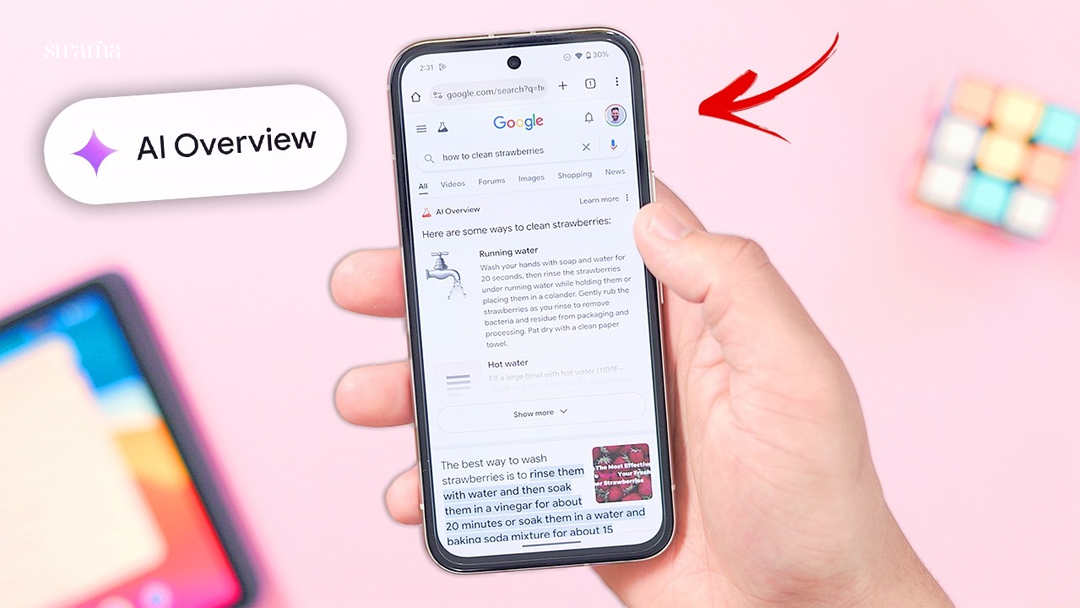
A potential customer in Jakarta wants to find a digital marketing agency. They start with Google, ask ChatGPT for recommendations, read a few reviews, and compare agency websites before deciding who to contact.
The journey involves several search experiences, but the customer has one goal: find a business they can trust.
This is where SEO, AEO, and GEO enter the conversation. As AI changes how people discover information, businesses are being introduced to new optimization terms and questions about which one deserves their marketing budget.
For brands trying to keep up, the terminology can get confusing. Understanding what each approach does, where they overlap, and when to prioritize them makes the decision much easier.
Each approach focuses on helping people find relevant information, although they target different search experiences.
SEO covers technical website health, content quality, search intent, backlinks and user experience. AEO places greater attention on clear answers to specific questions. GEO focuses on how generative AI systems discover, interpret, and reference information about a brand.
There is considerable overlap between the three. Good technical SEO helps search systems access content. Clear, well-supported information can help answer engines understand it. Credible references across the web can give AI systems more context about a business.
Google's own guidance on AI features in Search reinforces this connection. It recommends established SEO practices and useful content, while explaining that websites do not need special AI markup or an llms.txt file to appear in Google's generative search features.
People increasingly use AI to research products, compare services, and narrow down their choices. Their search journey can move between Google, AI assistants, social platforms, review sites and online communities.
Indonesia has 105 million generative AI users, equivalent to 54% of its working population. About 77% of AI conversations take place in a local language other than English.
These figures point to an important consideration for Indonesian brands: content needs to reflect how local customers actually ask questions, describe products, and evaluate businesses. English-language optimization alone may leave gaps in discovery.
A July 2026 study tested 1,250 Bahasa Indonesia consumer prompts across electronics, fashion, beauty, travel, and food. Only 34.2% triggered a live Google search through Gemini. Local queries triggered search grounding 88.6% of the time, while broad informational questions did so only 21.1% of the time.
The study also found that 47.7% of responses mentioned at least one brand. Its findings suggest that local and commercial intent can create different opportunities for brands seeking AI visibility.
The answer depends on how customers discover your category, what your website currently delivers, and where your business has the biggest visibility gap.
SEO remains a strong starting point for businesses that depend on organic search to attract customers.
A service provider targeting searches such as "digital marketing agency Jakarta" needs relevant landing pages, a technically sound website, useful content, and credible references from other websites.
An ecommerce business may need product pages that answer specific buying questions, clear category structures, and pages that load well on mobile devices.
SEO also helps establish the information that other search experiences can draw upon. Without accessible, useful website content, a business has less material to be discovered and understood.
AEO becomes relevant when customers need answers before they make a decision.
Consider someone searching for "How much does website development cost in Indonesia?" or "What should I look for when choosing an SEO agency?"
A business can address these questions through service pages, detailed guides, comparison articles, and well-organised information. Clear explanations, relevant examples and direct answers make the content easier for people and search systems to understand.
The aim is to answer the questions customers genuinely ask, rather than produce pages filled with repetitive keyword variations.
GEO becomes relevant when customers use AI tools to shortlist providers, compare brands, or explore products.
A person might ask ChatGPT to recommend Indonesian skincare brands for sensitive skin or compare digital marketing agencies for a small business.
Being mentioned in an answer can introduce a brand before the customer visits its website. That visibility depends on the information AI systems can find and interpret, including website content, credible third-party references, and consistent brand information.
Businesses can start by checking how their brand appears in relevant AI responses and identifying which sources those systems reference.
There is no guaranteed formula for appearing in AI-generated answers. However, several practical activities can improve the quality and accessibility of a brand's online information.
Local case studies offer a useful view of how traditional search and AI discovery can support the same business.
A published case study reports that SEO and GEO work for Indonesian F&B equipment supplier Toffin increased organic traffic by 260% over 12 months and generated 334 AI citations across platforms including Google AI Overviews, ChatGPT, Perplexity, and Copilot.
Taman Safari Indonesia's English-language AI citation rate increased from 12% to 38% between late June and early September 2026. It is attributed to a fixed set of buyer-intent prompts across five AI platforms. That increase reflects a shift toward AI systems citing the brand's own pages rather than relying mainly on reviews, travel forums, and booking websites.
Both examples demonstrate how businesses can monitor traditional search performance alongside their presence in AI-generated answers.
A business with limited marketing resources does not need to pursue every new optimisation term at once.
Start by reviewing how customers currently find the business. Look at organic traffic, branded searches, website enquiries, local visibility and the questions prospects ask before making contact.
Then identify the biggest gap.
If the website has technical problems or attracts little relevant organic traffic, prioritise SEO foundations. If customers struggle to find clear answers, improve the content and introduce AEO principles. If the brand rarely appears in relevant AI recommendations, investigate GEO opportunities and the sources shaping those responses.
The three approaches can work together as the strategy develops. Their priority should follow customer behavior and business objectives, rather than whichever acronym is receiving the most attention.
Search behavior will keep changing as AI tools become part of everyday research. Businesses need a clear understanding of where their customers look for information and what makes them trust a recommendation.
Swarna helps brands connect SEO, content strategy, audience insights and performance marketing to build a search presence that supports real business goals. Its approach considers how customers discover a brand across search engines, AI platforms and digital communities, then turns those insights into practical marketing priorities.
Looking to improve your brand's search visibility? Work with Swarna, the digital marketing agency that connects customer behaviour, search strategy and measurable growth.

Our SEO and content prowess isn't magic, but it's as close as it gets here at Swarna!
Let's transform your online presence, step into the spotlight, and be seen.