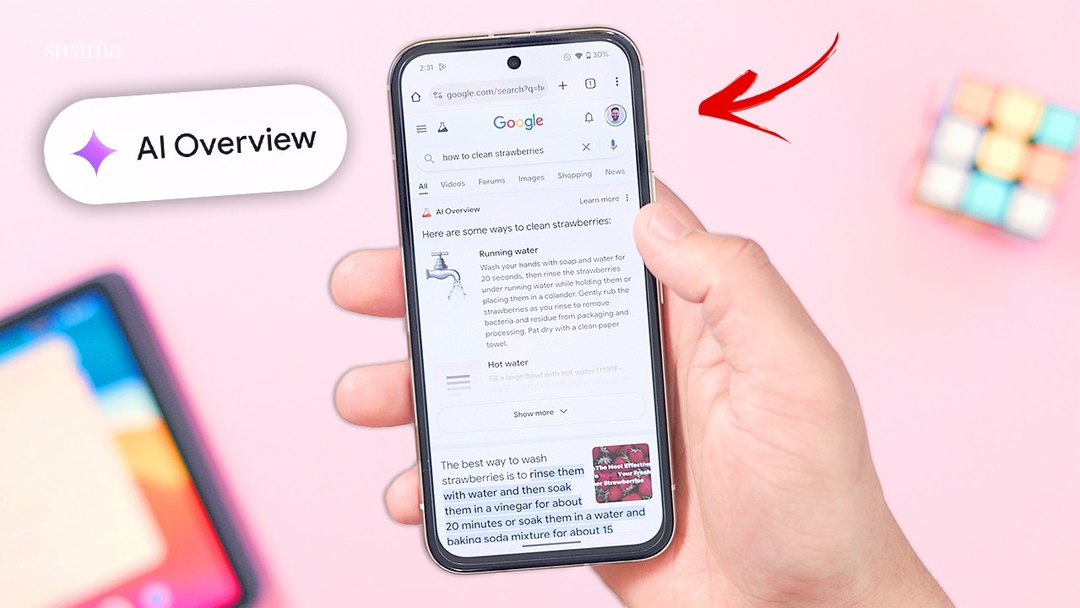
Your best long-form content might be written by now. It took a lot of drafts, revisions, and rewrites before it was published online.
Yet, almost nobody is reading it.
There’s no CTA or visual cue that tells people to check it out.
That content needs a little bit of a push from short-form content. It may not get viral, but it has to show up in other people’s feeds somehow in some little way.
We all know that the average person decides in 8.25 seconds whether to keep paying attention or not. An overwhelming 82% of Internet traffic is video, with nine out of ten businesses now using video as a marketing tool. In fact, short-form video ranks as the highest-ROI content format for nearly half of all marketers.
These numbers tell a clear story. People are consuming content differently: they prefer more visual content than ever before. That doesn’t mean that they are not reading anymore. You just need something to complement your 3,000-word white paper with a 30-second Instagram reel that captures the essence of it. Then maybe they will be more interested in digging deeper into the details.
This is why content repurposing matters. You’re not just reposting old content but breaking down long-form into digestible chunks of bite-sized short-form content. It is a strategic shift in how you think about content.
Creating a single piece of content from scratch takes hours of research, writing, editing, and design. Repurposing that same piece for multiple platforms cuts creation time. AI-assisted repurposing tools reduce production costs even further. Marketers who build systematic repurposing workflows increase their total content output without adding headcount.
Content marketing already costs less than traditional marketing and generates three times as many leads. Repurposing multiplies that advantage
If you think about it, most of your competitors are probably publishing one original piece of content at a time and moving on. They write one blog post, share it once, and let it die. You can actually extract ten content assets from the same content. You can even create different variations of that content in slightly different perspectives and angles.
Repurposing content is a sound marketing strategy you shouldn’t take for granted.
There is a persistent idea that short-form content is somehow dumbed down and lacks substance. And that real thought leadership lives only in long-form.
This is wrong.
Short-form content does not replace depth. It creates demand for it. Most consumers prefer to watch a short video to learn about a product or service. More importantly, they are more likely to buy after watching a video.
The best short-form content is an invitation that sparks curiosity, builds trust, and drives traffic to the deeper material: the long-form content.
Think of it this way: treat your long-form content as your foundation. Use the short-form content as the invitations. You need both. But most brands spend all their energy building one over the other and wonder why nobody shows up.
Long-form content, like blogs, white papers, and thought leadership articles, serves a specific function. They build SEO authority, establish trust, and provide Google and AI assistants with something substantial to cite.
The average first-page Google result contains 1,447 words. Articles over 3,000 words perform 2.5 times better than shorter pieces. Google's AI Overviews draw from structured, authoritative long-form content. Companies with a documented content strategy see 33% higher ROI than those without one.
But here is the problem: long-form content does not distribute itself.
Short-form content, like reels, TikToks, Stories, and Shorts, drives awareness, engagement, and top-of-funnel reach. Short-form videos generate 2.5 times more engagement per impression than any other content type. Videos under 60 seconds achieve a 50% engagement rate, while videos over 60 minutes drop to 17%. Up to 71% of viewers decide within the first few seconds whether to keep watching.
The synergy works like this:
Landing pages with embedded video increase conversion rates by up to 86%. Websites with video convert at 4.8% versus 2.9% without, a 65% improvement.
Long-form without short-form is invisible. Short-form without long-form is forgettable. The brands that win combine them into a single system.
Here is a practical framework. Start with one long-form asset, say, a 3,000-word thought leadership article on AI in digital marketing. From that single source, you can extract:
That is thirty-plus content assets from one piece of research. Each one is platform-native. Each one serves a different stage of the funnel. Each one requires a fraction of the production effort of creating from scratch.
There are no hard-and-fast rules, but there are good practices you may want to take note of.
TikTok, Reels, and Shorts
Optimal length varies by platform. TikTok performs best at 21 to 34 seconds. YouTube Shorts work well at 30 to 60 seconds. Instagram Reels hit their stride at 60 to 90 seconds. The hook matters more than anything else, so make sure that you front-load your most compelling insight in the first three seconds. Up to 85% of Facebook videos, 80% of LinkedIn videos, and 40% of Instagram videos play without sound, so captions are non-negotiable. Format everything in vertical 9:16 with safe-zone framing.
Instagram Stories
Break long-form insights into 15-second segments. Use polls, quizzes, and interactive stickers to drive engagement. Use link stickers to send traffic to the full article.
Carousels perform exceptionally well, turning article sections into slide decks. Native video posts get 5.1-6% engagement versus 2-3% for static images. Quote graphics from thought leaders drive high save rates, which signal the algorithm to show the content to more people.
It is important to understand that AI does not replace the strategist. You just need all the powerful tools you can get so you can explore the depths of your creativity.
The best repurposing workflows use AI for the mechanical work, transcription, resizing, captioning, scheduling, and humans for the work that requires judgment: brand voice, cultural nuance, emotional resonance, and strategic direction.
Here is a practical tool stack:
About 68% of businesses report increased content marketing ROI from using AI tools. While 95% of B2B marketers now use AI-powered applications in their workflows. The question is no longer whether to use AI. It is whether you are using it to amplify a smart strategy or to replace it altogether.
Have you ever wondered how everyone repurposes content? Here are some key trends that you should keep an eye on:
AI Search and GEO
Up 89% of B2B buyers now use generative AI during purchasing decisions. LLM referral traffic has grown 800% year over year. Your short-form content needs to be structured for AI extraction, clear headings, answer blocks, and schema markup. Remember, you are competing to be the source that AI assistants cite. Short-form content that answers specific questions becomes your citation currency.
Zero-Click Visibility
Users now ask questions inside ChatGPT, Perplexity, Gemini, and Meta AI, and often never reach a website. Your content needs to be designed for extraction, not just reading. Create short, structured definitions and summaries that AI models can reuse and attribute.
Multi-Account Distribution
Brands running multiple platform accounts segmented by audience produce aggregate organic reach several times larger than single-account approaches. The same repurposed content can be adapted for different audience segments with minimal additional production cost.
Raw Content Over Polished Ads
Casual, everyday content outperforms overproduced corporate video. Repurposing does not require Hollywood production. A founder's iPhone video can become ten Reels.
Live and Real-Time Repurposing
Live shopping in Indonesia continues to drive major e-commerce volume on TikTok, Shopee, and Tokopedia. Live sessions can be clipped into short-form content in real time, creating a continuous content pipeline without additional production cycles.
When it comes to repurposing content, you need an effective plan. It takes three simple steps.
Step 1: Foundation
Audit your existing long-form content, blogs, white papers, case studies, and webinars. Identify your top five highest-performing pieces. Extract ten to fifteen "content pieces" from each: standalone insights, statistics, quotes, or stories that can live on their own.
Step 2: Build
Create platform-specific content templates for Reels, Stories, carousels, and Shorts. Set up AI-assisted production workflows. Produce your first batch of repurposed content, aim for thirty-plus assets from five source pieces.
Step 3: Launch and Optimize
Distribute across platforms with strategic sequencing. Short-form teases. Long-form educates. Gated content converts. Measure performance: traffic, engagement, and conversions. Iterate based on data. Double down on what works. Refine what does not.
After that, the process becomes a flywheel. Every new long-form piece enters the repurposing pipeline automatically. Performance data feeds back into content creation.
Most agencies will resize your video for TikTok and call it repurposing. That is not what we do.
At Swarna, we architect content ecosystems. We start with your highest-value long-form assets, the research, the thought leadership, the brand stories you have already invested in, and we break them into platform-native content pieces that each serve a specific purpose in the funnel.
Our process combines technological efficiency and human creativity. Every piece still passes through strategists who understand your brand voice, your market, and the cultural nuance that makes content resonate.
Your best content is already sitting in your archives. Our job is to set it free, one piece of content at a time.
If you are ready to build a system that scales, book a content audit today.

Our SEO and content prowess isn't magic, but it's as close as it gets here at Swarna!
Let's transform your online presence, step into the spotlight, and be seen.


.svg)