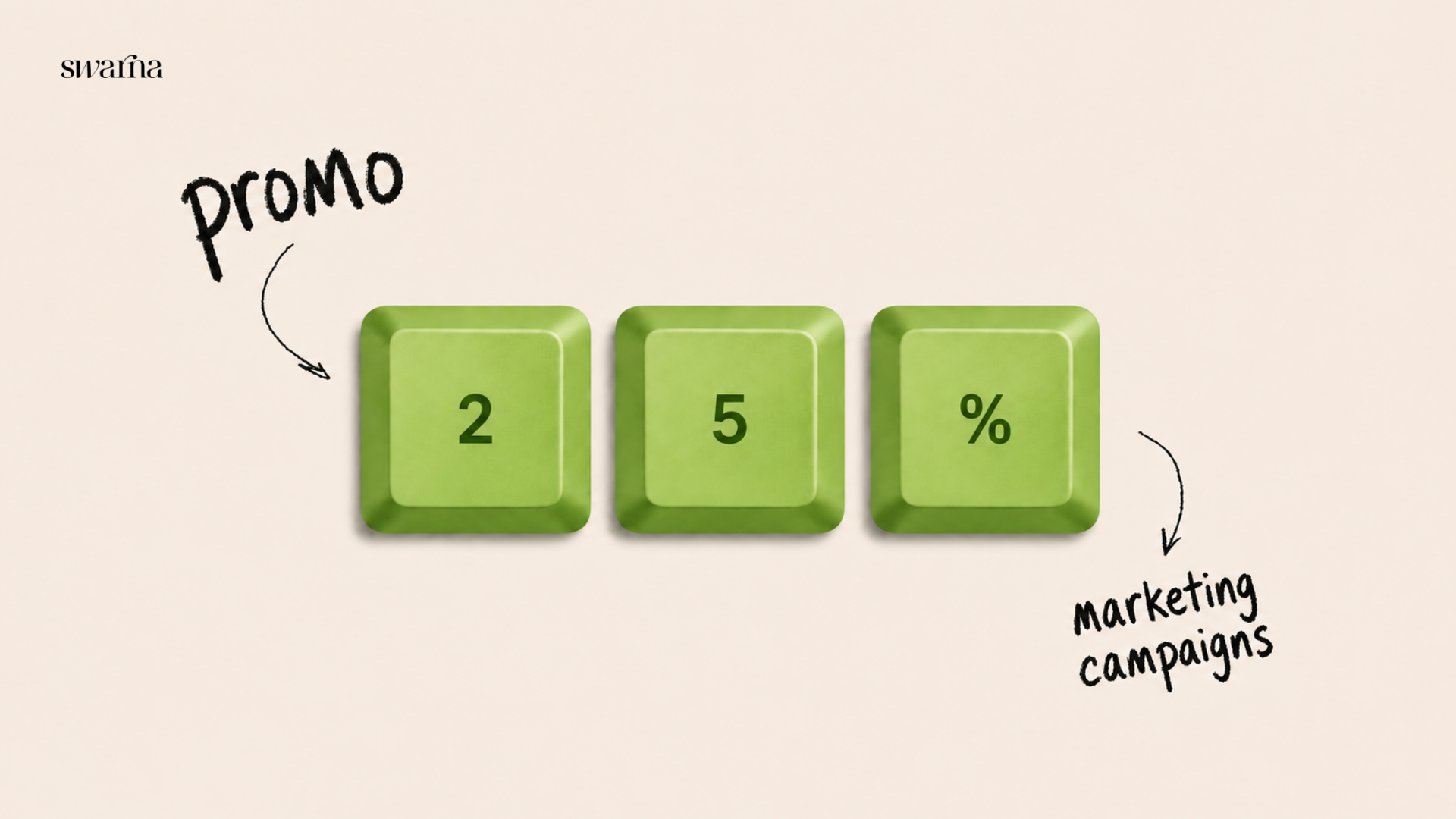
Nearly two-thirds of all Google searches end without a single click. When an AI Overview appears at the top of the results, that figure climbs to 83%. On Perplexity, the number is even starker: 93% of searches never lead to an external website.
Brands are pouring more money into SEO than ever. Agencies still sell "page-one rankings" as the ultimate prize. But the traffic that once justified those budgets is evaporating. Search is not dying, but it is splitting in two: the visible answer and the invisible journey that leads to it.
We’re entering the zero-click era. And it is reshaping how people discover brands in ways that most companies have not yet understood, let alone adapted to. The brands that figure this out now will own the next decade of digital trust. The ones that do not will keep optimizing for a search engine that no longer exists.
Google used to be a map. You typed a query, it showed you the roads, and you chose where to drive. That model held for roughly two decades. Then something changed.
In 2019, about half of all Google searches ended without a click. By 2024, Google had launched AI Overviews, which are AI-generated summaries that sat above the traditional blue links. In 2026, those overviews appear on most informational queries while its AI Mode keeps its sessions entirely inside Google's walls.
The shift accelerated because AI-native search engines were built zero-click-first. Perplexity, ChatGPT, Gemini, and other LLMs were designed to give answers, not send traffic. AI search traffic grew 527% year over year. Among Gen Z, 35% now use AI chatbots as their primary search tool. For this generation, the idea of "visiting a website" to get information is becoming as unfamiliar as dialing a rotary phone.
The panic that followed was predictable. "SEO is dead," the headlines screamed. But that misses the point. Search is not dying. The relationship between visibility and traffic is simply decoupling. The brands cited inside AI Overviews earn 35% more organic clicks than those not mentioned. And the clicks that do survive are higher quality: 23% higher conversion rates, 34% longer sessions, and 2.7 times more pages per session.
The game has not ended. The rules have changed.
Most coverage of zero-click search focuses on lost traffic. Fewer people talk about what happens inside the mind of someone who sees your brand in an AI answer but never clicks.
Here is what the data shows: users who see your brand cited in an AI Overview, but do not click, are 91% more likely to perform a branded search later. The AI citation plants a seed. The click was never the real goal. Trust transfer was.using AI for research queries, they are clicking less becausewith no screens and no clickable elements
Think about this real-world use case. A brand that has restructured its content to earn AI Overview citations saw its organic referral traffic drop significantly. But their direct branded search volume grew. The people who eventually visited their site were warmer, more qualified, and closed faster. The funnel had not broken. It had simply rearranged itself to this: AI citation → brand recall → direct search → conversion.
This is the assisted conversion effect, and it is invisible in traditional analytics. Last-click attribution cannot see a journey that starts in an AI Overview and ends three days later in a direct brand search. Your Google Analytics dashboard will tell you that traffic is down. It will not tell you that awareness is up or that the awareness is working.
Then there is the zero-screen frontier. Voice search, smart speakers, car dashboards, and other wearables are surfaces that have no screen and no click possible. When someone asks their car's AI who makes the best project management software for construction firms, the answer is either your brand or it is not. There is no SERP to scroll. No link to weigh. Just a name spoken aloud.
Since most Gen Z prefer AI search for research queries, they are clicking less since the answer is provided right away.
Zero-click search hits differently depending on what you sell.
For local businesses, 62% of searches end without a website visit. That sounds catastrophic until you look at what actually happens: 28–35% of those users take action directly from the Google Business Profile by calling, getting directions, or booking an appointment. The profile has become the new homepage.
Here’s another case: a regional HVAC company has flatlined website traffic for years. Yet, their Google Business Profile is generating three times more "directions" and "call" actions. Customers were not visiting their site. They were visiting their shop. The metric that mattered was not sessions or bounce rate. It was trucks rolling out of the garage.
This is not an argument against websites. It is an argument against measuring the wrong things.
There is a new playbook emerging as brands readjust their strategies to deal with the rise of zero-click search and the significant impact on their business.
Traditional SEO chases position. The new discipline Generative Engine Optimization (GEO) chases mention. The goal is not to rank first. It is to be the brand that AI systems cite when they synthesize an answer.
Answer Engine Optimization (AEO) is a common practice of structuring content so it feeds featured snippets, People Also Ask boxes, and AI summaries. The mechanics are specific. Lead every section with a 40–60-word direct answer. Use FAQ schema. Structure content with clear headings and concise definitions. AI systems extract answers the same way a student highlights a textbook: they look for the sentence that stands alone.
AI systems do not just read content. They read entities like the named people, companies, products, and concepts that appear across the web. A brand with an active Google Knowledge Panel sees 3.2 times higher brand search volume. The Knowledge Panel is a signal to AI systems that your brand is a real, referenceable thing.
One thing we could do for clients is entity graphs that map their brand across high-trust surfaces, such as industry publications, review platforms, Wikipedia, and academic citations, and expand that footprint systematically. The new backlink is a brand mention in a context that AI training data ingests.
Not every query deserves the same approach. Smart brands run two tracks in parallel.
The decision framework is simple. Match the intent to the outcome. A user searching "what is zero-click search" wants an answer. A user searching "zero-click search strategy for SaaS" wants a partner. You just have to give each one what they came for.
Here is a hard truth: as most searches now end without clicks, your Google Analytics dashboard is capturing an increasingly small fraction of the buyer journey. The assisted conversion, which is an AI Overview impression that drives a direct brand search days later, does not show up in last-click attribution. It does not show up at all.
Most companies are flying blind. Only 14% of marketers currently track AI visibility. That means 86% are optimizing for a funnel they can no longer see.
The new KPI stack looks different:
Publishers are in the most pain. News queries see a 69% zero-click rate, and publisher visibility inside AI answers dropped 13 percentage points in a single year. The old model of writing articles and earning ad revenue from traffic is collapsing for informational content.
The publishers surviving are the ones pivoting. They are moving from article factories to data and perspective providers. They are publishing original research, proprietary datasets, and expert analysis that AI systems cannot synthesize without citation. If AI needs your data to answer a question, you become uncitable, and that is the new form of indispensability.
E-commerce, on the other hand, has a shield. Transactional queries maintain the lowest zero-click rate at 39.4%. Searches containing "buy" plus a product name see only 28% zero-click. Intent to purchase still drives clicks.
For example, a DTC brand has doubled its high-click intent comparison and review content while using AI Overview optimization for educational top-of-funnel pieces. The result is they captured awareness in the zero-click layer and captured revenue in the click layer. These tracks fed the same funnel.
B2B services occupy the middle ground, and the stakes are high. That’s why B2B buyers now use generative AI in 89% of purchasing journeys. The brand that gets cited during the research phase wins the RFP phase, even if they never earned the initial click. Trust is virtually transferred in the AI-generated answer. The sale closes during the sales call.
The numbers point in one direction. Google’s zero-click rate is projected to reach 68-72% by 2028. AI search market share, currently at 4.3%, is expected to hit 10% by the end of 2027. Organic click volume is projected to decline 25% relative to the 2024 levels.
However, there is one variable brands have to deal with: regulation. The EU Digital Markets Act is pressuring Google to show more external sources. Europe's zero-click rate (59.7%) is already slightly lower than the US (58.5%), and the gap is narrowing. Whether regulation slows the trend or simply reshapes it remains to be seen.
The bigger shift on the horizon is agentic search. AI agents will soon act on behalf of users, whether it's booking flights, comparing vendors, or scheduling demos. The user may never see a search result at all. The implication for brands is stark: optimize for agentic action, not just human clicks. If an AI agent cannot find, verify, and trust your brand, it will not recommend you. And the user will never know you existed.
The zero-click shift is a closing window of opportunity. Probably months before the new rules harden into the next status quo. The brands that move now will build citation equity, entity authority, and AI-native measurement systems while their competitors are still chasing page-one rankings for traffic that no longer flows.
The winners will be brands that:
The losers will keep optimizing for a search engine that has already changed and wonder why their traffic keeps falling while their competitors keep growing.
While traditional agencies sell keyword rankings and traffic reports, we engineer brand presence inside the AI systems where your customers now begin their journey. We combine GEO, AEO, entity building, and AI-native measurement into one strategy.
If you are ready to stop chasing clicks and start owning discovery, talk to our team today.

Unveil the secrets of ghost engagement on Instagram with the help of our expert marketers at Swarna!
Let's help you banish the specters and embrace authentic connections for lasting online success.


.svg)