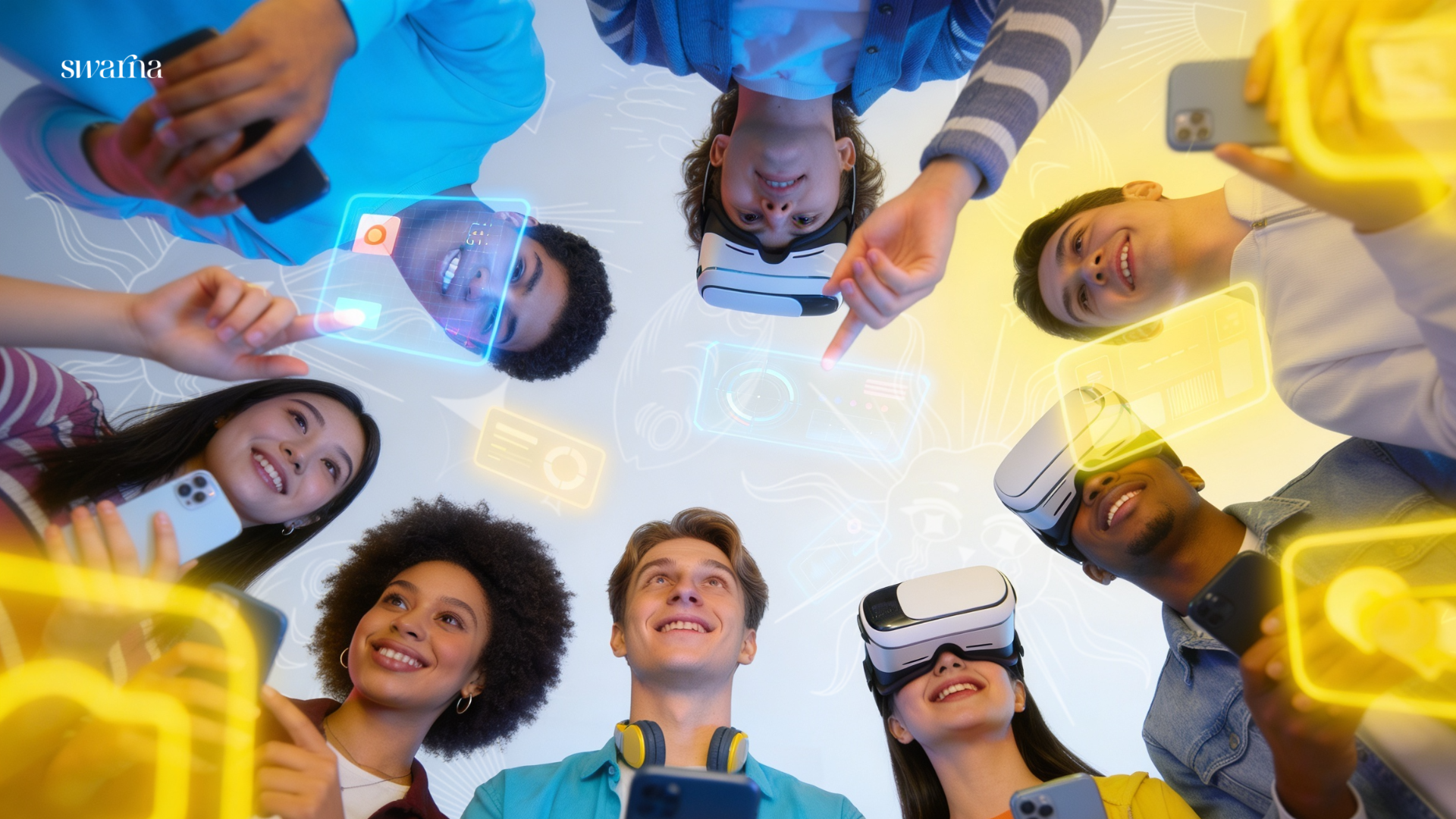
Every generation has adapted to the ever-changing digital landscape in which we will live in now in different ways. Some have fully embraced the convenience of automation of the things we do at work and play. While others are resisting the tide of change.
We all live in our own individual bubble, and when we bump into each other, we either create one bigger collective bubble or our own will burst. Take the case of these people below:
A grandmother in Manila orders groceries through Facebook Marketplace. Her millennial son researches sustainable brands on Reddit. His Gen Alpha daughter asks an AI assistant to find her a hoodie like the one a robot wore in a video she saw. Three consumers. Three digital worlds. Almost no overlap.
This is the reality of modern marketing. We are no longer selling to generations as monoliths. We are selling to parallel digital lives that happen to share DNA. Boomers adopted digital tools. Gen Z mobilized them. Gen Alpha is being raised by them, including AI companions that older generations view with suspicion.
The brands that will matter in the next decade do not target generations separately. They build bridges. They create narrative architectures that allow a brand to exist credibly in multiple digital civilizations at once.
Each generation lives in a distinct digital environment with its own rules for discovery, trust, and transaction.
Baby Boomers are digital immigrants who have not yet fully converted. They download 1.2 billion apps per month, use Facebook and email, and trust traditional authority and clarity. They are retiring with accumulated wealth and increasingly adopting healthcare technology.
Gen X acts as the skeptical bridge. They rely on email, search, and loyalty programs. They value authenticity and practicality. They are in peak earning years, often caring for both parents and children simultaneously.
Millennials are omnichannel natives. They discover brands everywhere: social media, search, podcasts, and live events. They need consistency across touchpoints. They are the largest workforce segment, driven by values but short on time.
Gen Z represents the social search generation. They find products on TikTok, Instagram, YouTube, and Discord. They trust peer validation and creator authenticity. They are value-conscious, mobile-payment native, and their spending power will quadruple by 2030.
Gen Alpha is the AI-native generation. They discover products through YouTube, TikTok, and influencers. They want interactive, participatory, and adaptive experiences. They already control over $28 billion in direct spending. They are the first generation defined entirely by AI.
But here is what most marketing discourse misses. Generations are treated as vertical silos. The real action happens in horizontal spaces through family group chats, shared streaming accounts, and the "Can you help me set this up?" moments. Brands that ignore these intergenerational transfer zones miss where real influence forms.
Then there is also the “Zalpha cusp,” the intersection of Gen Z and Gen Alpha. They represent something new: the first cohort where younger siblings teach older siblings how to interact with AI, not the reverse. This creates reverse digital mentorship inside families, a dynamic no previous generation experienced.
The generational gap is not experienced equally everywhere. This creates entirely different marketing realities across the world.
Countries like Nigeria, India, the Philippines, and Indonesia have a youth bulge with median ages under 25. These populations are highly digital and highly connected, but face structural unemployment and underemployment.
These are not traditional emerging markets. They are hyper-digital economies with frustrated economic potential. Gen Z in these regions uses TikTok for job tips, not just entertainment. They expect brands to offer economic opportunity, not just products.
Industrialized and developed countries like China, Japan, Germany, Italy, South Korea, and soon the United States face shrinking workforces, costly social services, and labor shortages. But they hold significant accumulated wealth.
The silver economy is being redefined. Boomers in these markets are not just buying healthcare and cruises. They are filling job vacancies, managing digital assets for the Great Wealth Transfer, and making purchasing decisions for their Gen Alpha grandchildren.
As the Global North ages and the Global South's youth bulge grows, cross-border generational marketing is emerging. A brand selling to a 65-year-old German retiree is, in many ways, selling to the economic future of a 22-year-old Nigerian freelancer who provides digital services to European companies.
The generational gap has become geopolitical. Brands need to think in terms of generational value chains, not just generational segments.
AI has become the new generational fault line.
While marketers rush to implement AI chatbots and recommendation engines, they miss a deeper cultural tension. Gen Alpha is forming emotional bonds with AI in the form of virtual companions, AI tutors, and character bots. Boomers experience what psychologists are starting to call artificial intimacy suspicion, a distrust of anything that simulates human warmth without human presence.
This is not just a user experience problem. It is a brand trust architecture problem. The same AI that makes Gen Alpha feel seen makes Boomers feel watched.
Effective generational marketing requires moving beyond the standard advice of using different channels with the same message. It needs a four-layer approach.
Every generation needs to feel the brand understands their specific struggle. But the emotional truth beneath the struggle is universal.
The Boomer wants to stay relevant. The Gen Xer wants to be heard. The Millennial wants to make the right choice. The Gen Zer wants to be authentic. The Gen Alpha wants to participate.
The brand does not say the same thing five ways. It says one true thing that each generation recognizes as their own truth.
Boomers need email sequences that respect their time, Facebook communities that feel like neighborhood gatherings, and clear, substantial offers.
Gen Z needs social search optimization with TikTok treated as a search engine, creator partnerships that feel like peer recommendations, and gamified instant experiences.
Gen Alpha needs interactive adaptive content, AI-mediated discovery, and participatory brand experiences where they co-create.
The most powerful strategy is designing campaigns that require cross-generational interaction. These different generations have to mingle with each other at some point.
A fitness app where the Gen Z child challenges the Boomer grandparent, with the Millennial parent as referee. A financial literacy platform where Gen Alpha teaches Boomers about crypto wallets, and Boomers teach Gen Alpha about compound interest. A sustainability campaign where purchasing decisions must be co-signed by two generations.
Gen Alpha is developing nostalgia for things they never experienced, such as analog photography, simple phones, and vinyl records, because they see these as resistance technologies against the algorithms that their overwhelmed Millennial parents complain about. Meanwhile, Boomers are experiencing digital nostalgia, a fondness for the early internet's simplicity.
Smart brands create intergenerational nostalgia exchanges: products and content that allow Boomers to share their internet with Gen Alpha, and Gen Alpha to share their AI with Boomers.
We are entering the era of post-generational marketing. The most successful brands will not be those that master Boomer or Gen Alpha marketing. They will be the ones that recognize the generational gap not as a problem to solve, but as creative tension to harness. The gap is where the interesting stories live.
The future belongs to brands brave enough to build bridges between worlds.
At Swarna, we do not just understand generations. We design the conversations they have with each other.
Our work spans social search optimization, hybrid campaign design, and cross-platform narrative strategy.
If your brand needs to speak to multiple generations without sounding like a translation, we should talk.

Experience the enchantment of data-driven creativity, where every project is a spell waiting to be cast. We have a team of sorcerers ready to weave digital narratives that captivate, inspire, and elevate your brand to new heights.
Let the magic unfold at Swarna and redefine the possibilities of digital marketing. Together, we create brilliance that transcends the ordinary.


.svg)