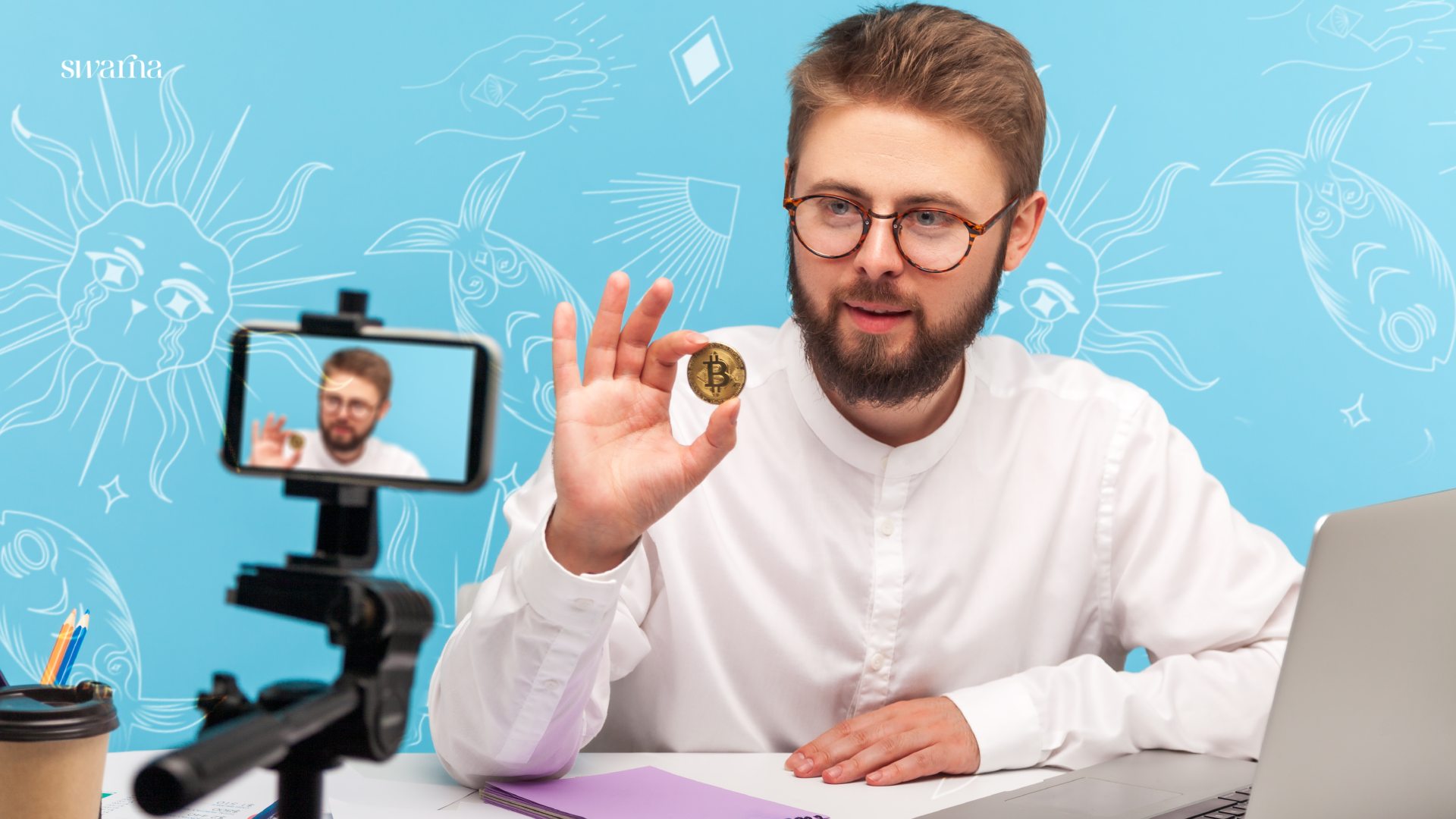
Have you ever asked why a lot of young people these days want to become a ‘content creator’?
And when you’re doomscrolling on any platform, you will see “AI slop taking over your feed with posts from people you don’t even follow. You try to get away from it, only to be confronted with YouTubers promoting tutorials on how to create a faceless channel for a quick and effortless money grab.
Brands have to deal with a new audience demographic increasingly exposed to AI, fake news and disinformation, and content automation. The digital marketing landscape is not the same as compared to the early days of the Internet.
Think about this: a viral video of a man rating sandwiches in his car can now outperform a six-figure television commercial. Not because it costs less to produce. Not because it reached more people. Because it felt real. Because the person on screen talked like someone you might actually know, in a car you might actually sit in, about food you might actually eat.
That’s the reality. Let that sink in.
This is the creator economy in 2026. It is projected to hit $480 billion by 2027. Over 200 million people worldwide now identify as creators. Social commerce is racing toward $2.9 trillion. And yet, we are running out of people willing to watch.
Or, we might just be too lazy to create new, original content that people actually care about doing it. You know what it is. Content that’s actually made from scratch.
We all know that the creator economy has become the driving force in digital marketing. Yet, it also becomes a paradox as more people want to make content. The sad thing is, people are just scrolling through and going through the paces. No one seems to be caring anymore.
People only engage when they are baited into doing it through anger, outrage, and feel good about themselves. Artificial intelligence is flooding platforms with synthetic material that trains on itself, drifting further from human reality with each loop. And the "democratization" promised by platforms like TikTok has, according to recent academic analysis, simply recreated old broadcast hierarchies with new faces.
Brands have to understand what is actually happening.
Walk up to a group of teenagers and ask about their career plans.
A 2023 NPR survey found that one in four Gen Z respondents planned to become social media influencers. In Indonesia, 64% of social media users say they would accept payment from brands to promote products, and half are ready to quit traditional jobs for full-time creator work. In the United States, 27 million people already earn income through content creation.
The surface explanation is simple: fame, flexibility, the dream of getting paid to do what you love. But the deeper explanation is structural.
Global entry-level job postings have fallen by 29 percentage points since January 2024. Gen Z workers stay in their first roles for an average of 1.1 years, compared to 2.9 years for Baby Boomers at the same career stage. Nearly half say their current job does not match their long-term ambitions. Two in five feel held back by factors outside their control: education gaps, socioeconomic background, and family obligations.
In Indonesia, where youth unemployment sits at 4.76% and complex recruitment barriers exclude many qualified candidates, content creation offers something rare: a way to work without gatekeepers. No degree requirements. No age limits. No office politics. Just a phone, an idea, and an audience. Just like the gig economy jobs, where there’s no barrier to entry, and anyone could just pick up and start right away.
Lia Haberman, who teaches social media and influencer marketing at UCLA, puts it plainly: "There is no loyalty in corporate culture anymore." Young people watched their parents build careers only to face layoffs. They watched "safe" industries collapse. They see creators their age building independent businesses, setting their own rates, owning their audiences. They see a roadmap.
What they do not always see is the spreadsheet behind the screen. Successful creators spend roughly 40% of their time on administrative work: contracts, taxes, negotiation, and analytics. The influencer Jalyn Baiden, who charges brands more than $5,000 per video, describes her work as "60% the fun stuff, 40% paperwork." The creator economy is entrepreneurship wearing a friendly face. It demands business skills, emotional resilience, and the ability to treat your personality as a product without losing yourself in the process.
Platforms like TikTok were supposed to change everything. No expensive equipment. No industry connections. Just raw talent and algorithmic fairness. A factory worker in Italy named Khaby Lame could become the platform's biggest star with silent videos mocking overcomplicated life hacks.
But a 2025 study tells a different story. Researchers analyzed nearly 25 million TikTok videos and found that the platform reproduces the same participation inequality that has governed media for decades. The "90-9-1 rule" holds: roughly 90% of users lurk, 9% contribute occasionally, and 1% produce the vast majority of popular content.
The study reveals a "spoke-hub" network structure where influence concentrates around central figures. Once a creator breaks into the top 10% of engagement, they tend to stay there. The gap between broadcasters and audiences does not shrink; it simply rescales. More people can technically broadcast, but the attention economy still funnels most rewards to a small elite.
This matters for brands because it reframes the "authenticity" they are buying. A micro-influencer with 10,000 engaged followers may feel more accessible than a celebrity, but they are still operating within a system that rewards broadcast over dialogue, performance over participation. The creator economy has not democratized culture. It has democratized the chance to become a broadcaster, while keeping the underlying power structure intact.
Here is the math that should worry marketers: 200 million creators. Five billion social media users. If even a fraction of those users are creating regularly, who is left to watch?
The answer, increasingly, is artificial intelligence. Not watching, exactly, but generating. Training on existing content to produce new content. Feeding a loop where human-created data becomes scarce, and models begin training on their own synthetic output.
Sharon Zhang, CTO of Personal AI, calls this the "synthetic data collapse." When AI learns from people, it reflects human patterns, flaws, and creativity. When it learns from itself, it amplifies its own assumptions. Medical symptoms that do not co-occur in real patients are combined. Legal reasoning across jurisdictions gets merged. Creative work becomes a remix of a remix, losing the edge cases and lived experiences that make content resonant.
Stack Overflow, once a vibrant hub of human problem-solving, has seen participation decline as users rely on AI-generated answers. The knowledge base grows static. The diversity of human experience that once trained these systems thins out. As Zhang notes: "AI can remix what exists, but it cannot generate new edge cases out of thin air."
For brands, this creates a trust crisis. If audiences cannot tell whether content was made by a person or a model, the currency of authenticity collapses. Human trust, the very advantage that made creator marketing powerful, simply erodes.
The data on creator marketing remains compelling. It is important to know that 61% of consumers trust creator recommendations more than brand advertising. Creator campaigns generate up to four times the engagement of traditional ads. Social commerce is not slowing down.
But the playbook has changed. The winning brands are not those with the biggest influencer budgets. They are those treating creators as long-term partners, not rented audiences.
Lowe's built the first creator network in home improvement, providing tools, project funding, and business support rather than one-off sponsorships. Early partners include MrBeast and Chris Loves Julia, but the model is designed to support creators at every stage of growth. They are building an infrastructure just for the creators they work with.
For most brands, the starting point is simpler but no less strategic:
A creator whose values clash with your brand will do more harm than good, regardless of follower count. A niche expert with 5,000 highly engaged followers often outperforms a generalist with 500,000 passive ones.
Creators know their audiences. Brands that hand over 12-slide briefs and suggested captions get content that feels like advertising. The goal is to sound like a recommendation from a friend, not a press release.
One post disappears. A relationship compounds. Track what works through custom links and CRM integration. Repurpose creator content across email, product pages, and paid channels. Turn a single video into a quarter-long asset.
The creator economy grew from the gig economy, and it faces similar pressures. Deloitte's research points to rising demands for transparency, fair pay, and regulatory protection. Brands that treat creators as disposable contractors will face backlash. Those who invest in mutual growth will build loyalty that outlasts any algorithm change.
As AI-generated content floods platforms and human attention becomes the scarcest resource, the next competitive advantage will not be creation. It will be curation. Judgment. The ability to sift through noise and surface what actually matters.
This is where the opportunity sits for brands willing to think beyond the current cycle. The future belongs to companies that:
The creator economy is maturing. And maturity brings new rules.
The creator economy rewards complexity. Platform algorithms shift without warning. Audience attention fragments across channels. The line between human and synthetic content blurs. In this environment, brands need more than an influencer database and a media kit. They need strategic clarity.
This is where we come into the picture.
At Swarna, we work with brands to identify creators whose communities align with their values, not just their demographics. We build content playbooks that preserve creative authenticity while delivering measurable business outcomes. We integrate creator campaigns into CRM and attribution systems so that engagement translates into actual revenue at the end of the day.
Most importantly, we understand that the creator economy is entering a new phase. We help you prepare for what’s coming up next with all the twists and curveballs that might happen.
If you are ready to move beyond transactional influencer posts and build something that lasts, we should talk now.

Our SEO and content prowess isn't magic, but it's as close as it gets here at Swarna!
Let's transform your online presence, step into the spotlight, and be seen.


.svg)