You may agree or not, but the attention economy is shaping the way we think and act.
There is a dirty secret that probably divides opinion: digital marketing has become a system designed to make brands act like consumers are getting dumber.
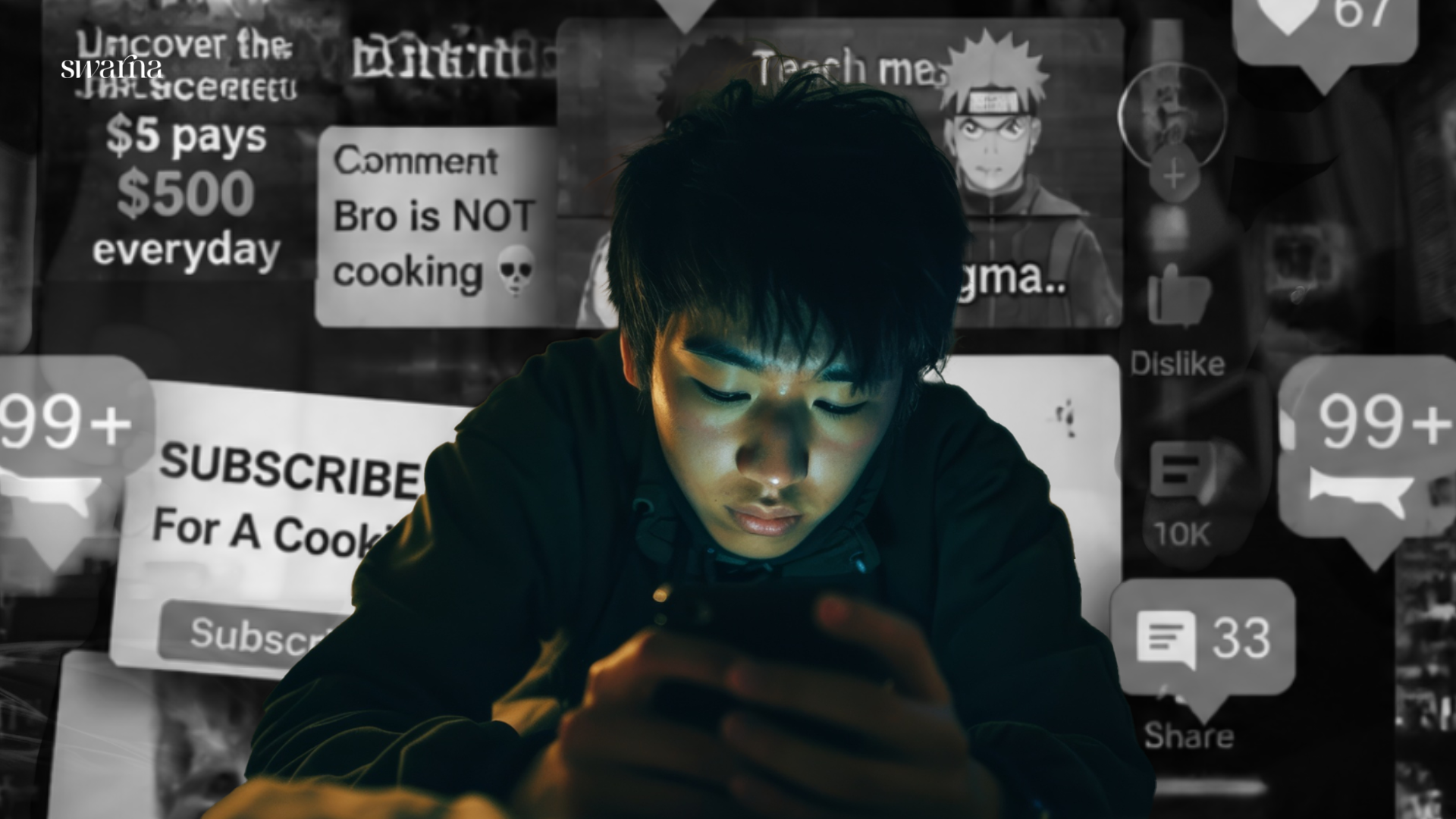
Whether it’s outrage or absurdity, some brands are willing to bend and even break the rules just to get people to talk about them. The algorithm is rewarding those who can keep the audience's eyes on the screen. And if that means flooding the Internet with low-effort AI slop or brain rot content, some would do it in a heartbeat.
Digital marketers are doomscrolling competitor feeds, hunting for the next viral moment to replicate. Brand strategists are quietly dying inside because the quarterly KPPI deck demands “more engagement.” Gaming the algorithm means force-feeding people with “high-dopamine” content. The harder brands social engineer collective behavior, the more they contribute to the very fatigue that makes audiences tune out.
This is the "brain rot" diet. Rinse and repeat.
Social media platforms do not reward depth. They reward dwell time and share velocity. The result is a perverse incentive structure where the lowest-effort, highest-arousal content wins. Not because it is good. Because it is sticky.
AI-generated slop, absurdist memes, and viral mascots are becoming all too common these days.
The numbers tell the story, with 87% of marketers now using generative AI in at least one recurring workflow, up from 51% just two years ago. The result is an unprecedented flood of content where volume is half the equation and moderation is the other. But moderation is losing.
In the UK, 49% of adult social media users actively post, share, or comment. That is down from 61% in 2024. People are consuming more but participating less. That is not engagement. That is passive, fatigued scrolling.
Meta recently launched "Vibes," a social media platform consisting entirely of AI-generated content. The question no one is asking: who cares? When everything is generated, nothing is genuine. And audiences are starting to notice.
Here is the paradox that keeps brand managers awake at night: brands know that chasing every trend dilutes identity. One in two consumers views excessive trend-following as inauthentic. Yet the quarterly pressure for "more engagement" forces marketers to do exactly that.
The result? A generation of brands that feel interchangeable, forgettable, and increasingly desperate.
This is a professional crisis, not just a consumer problem. The constant pressure to post daily, chase trends, and generate content at machine speed is burning out the people making the content. The "brain rot" diet is being force-fed to marketers too, not just audiences.
And the worst part? It is not even working.
Audiences are not just tired of low-quality content. They are becoming suspicious of it.
Searches for "digital detox" peaked in December 2025. It’s no longer just a passing trend; it has become a cultural signal.
The majority of consumers now expect brands to disclose AI use in marketing. Only 35% of consumers trust AI-generated content. Most people say authenticity is a key factor in deciding whether to support a brand. And they are willing to pay more for brands they consider authentic.
The most trusted content types are search results and user-generated reviews. Brand-produced content ranks significantly lower. The message is clear: audiences do not want more content. They want better content. They want content they can trust.
Short-form video is showing clear signs of fatigue. Feeds feel "samey" with the same trends, same templates, and same sounds. A view on a 10-second clip does not equal trust or loyalty. Creation burnout is real for both creators and brands.
Some users are actively seeking content that slows them down instead of speeding them up. Longer videos are now driving engagement, building communities, and even getting featured in Google's AI Overviews. The counter-movement is already underway.
Not every brand is playing the algorithm's game. The ones that matter are the ones that walked away from it.
In 2018, Nike released "Dream Crazy," featuring Colin Kaepernick. It was not safe. It was not optimized for shares. It was a calculated risk that aligned with Nike's core values of resilience and social justice.
Online engagement increased by 31%. Sales for campaign-connected products rose by 10%. The stock price hit record highs. Brand favorability surged among millennials and Gen Z, who increasingly value authenticity and purpose-driven brands.
They didn’t game the algorithm but made it irrelevant by creating something people wanted to talk about.
In 2011, Patagonia ran a full-page ad in the New York Times on Black Friday with the headline: "Don't Buy This Jacket." They openly discussed the environmental cost of consumerism and urged people to repair, reuse, and recycle.
Sales increased by approximately 30% in the months following the campaign. Revenue grew from $415 million to $543 million, then to $575 million by 2013, eventually hitting $1 billion by 2017. The campaign generated over $15 million in free publicity.
Patagonia's "anti-marketing" worked because it was consistent with decades of action, not a performative stunt. Real brands do not just talk about their mission and vision. They live them.
Dove shifted from selling soap to validating self-worth. The "Real Beauty" campaign, particularly the "Sketches" video, tackled unrealistic beauty standards head-on.
The Sketches campaign pulled in over 100 million views. Earned media value far exceeded paid spend. Dove went from "just another soap" to a cultural conversation starter. The campaign sparked debates about body image that crossed over from marketing into education and media.
Unlike chasing viral trends, Dove created a movement. The campaign worked because it addressed a real human pain point with empathy, not because it optimized for the algorithm.
The most sophisticated CMOs are moving away from "attention as a universal KPI" and toward intentional curation.
A mortgage brand should not optimize for the same attention metrics as a candy bar. Category-specific attention models are replacing one-size-fits-all engagement metrics. The programmatic system is cracking down on "Made for Advertising" content and multi-hop reselling.
Community-first marketing is replacing feed-first marketing. Brands are building owned communities where engagement is deep, not just wide.
AI is standard in social media campaigns now, but strategy, planning, control, and quality remain human. The winning brands use AI for efficiency through A/B testing, ad optimization, and analytics while keeping storytelling, positioning, and creative direction human-led.
With 91% of consumers expecting AI disclosure, the brands that thrive contextualize it.
"Slow content" is emerging as a strategy. Just as "slow fashion" and "slow food" became cultural counter-movements, brands are investing in longer-form storytelling, educational content, and purpose-driven campaigns that outlast trend cycles.
As Sprout Social put it: "Moving into 2026, brands need to prioritize genuine connection and storytelling, rather than blindly hopping on social media trends and chasing fleeting moments."
Yes, there is.
The attention economy wants you to believe that the only way to win is to play its game. Post more. Chase faster. Generate louder. But the brands that will define the next decade are the ones that had the courage to serve something more nourishing.
The "brain rot" diet is a choice, not an inevitability. And it is a choice that more brands are refusing to make.
The question is: which side of the feed do you want to be on?
At Swarna, we help brands escape the attention economy trap without abandoning digital channels. We use data to measure what actually builds brand equity not vanity metrics.
Our creative direction stays human-led, even as we use AI for optimization and efficiency. And we help brands create campaigns that go viral for the right reasons: because they resonate, not because they are absurd.
If you are tired of chasing trends and ready to build marketing that lasts, talk to our team today.

Unveil the secrets of ghost engagement on Instagram with the help of our expert marketers at Swarna!
Let's help you banish the specters and embrace authentic connections for lasting online success.


.svg)