Today’s digital landscape is driven by attention through viral content and unskippable ads. Algorithms favor brands that put themselves in the limelight through compelling messaging. But how can they stand out when most brands are boring on purpose? Consumers assume that professionalism means seriousness, while brands are hesitant to use humor as a bad joke might ruin their credibility.
That’s why only 18% of online ads use humor, even though 80% of consumers are more likely to buy again from a brand that makes them laugh.
What we think of as a risk gap is actually a marketing opportunity. The contradictory findings suggest that brands don’t trust themselves to pull it off because of the fear of public backlash and, worse, getting cancelled. Few are afraid to risk it all, knowing fully well that consumers can scroll past them every three seconds.
Either go for AI-generated perfection or be brave enough to crack an awkwardly human piece of content. There is an element of trust here, as well as the fact that not all humor translates well to everyone. If a brand goes to a more lighthearted comedic route, it has to think like a stand-up comedian who can maneuver through unexpected obstacles.
When a brand makes you laugh, something physical happens. Your brain releases dopamine. Your defensive walls drop for about 1.2 seconds. In that window, a brand message slips past your internal ad filter and lands in long-term memory.
It is interesting to point out that 71% of consumers remember brands that make them laugh, and 74% of recognized brands are linked to humorous advertising. It’s not a coincidence that these numbers lined up.
Psychologists call it the benign violation theory, where humor signals that something is safe enough to joke about, but surprising enough to catch you off guard. A brand that can laugh at itself feels human. No one would love a soulless brand that feels like a chatbot.
This matters more than ever as more consumers start using AI tools for recommendations instead of traditional search. The brands that get remembered will be the ones with a distinct, human voice. Although AI can optimize delivery, it can never optimize personality.
Coca-Cola learned this the hard way. Their fully AI-generated holiday commercial was technically flawless, but it was also judged as "cold," "weird," and "soulless.” The backlash proved that efficiency without humanity backfires. People just want the minute subtleties that make the brand feel more human.
Most brand humor fails because companies default to telling jokes, which is the lowest, riskiest form. The brands that win use one of three architectures, chosen deliberately.
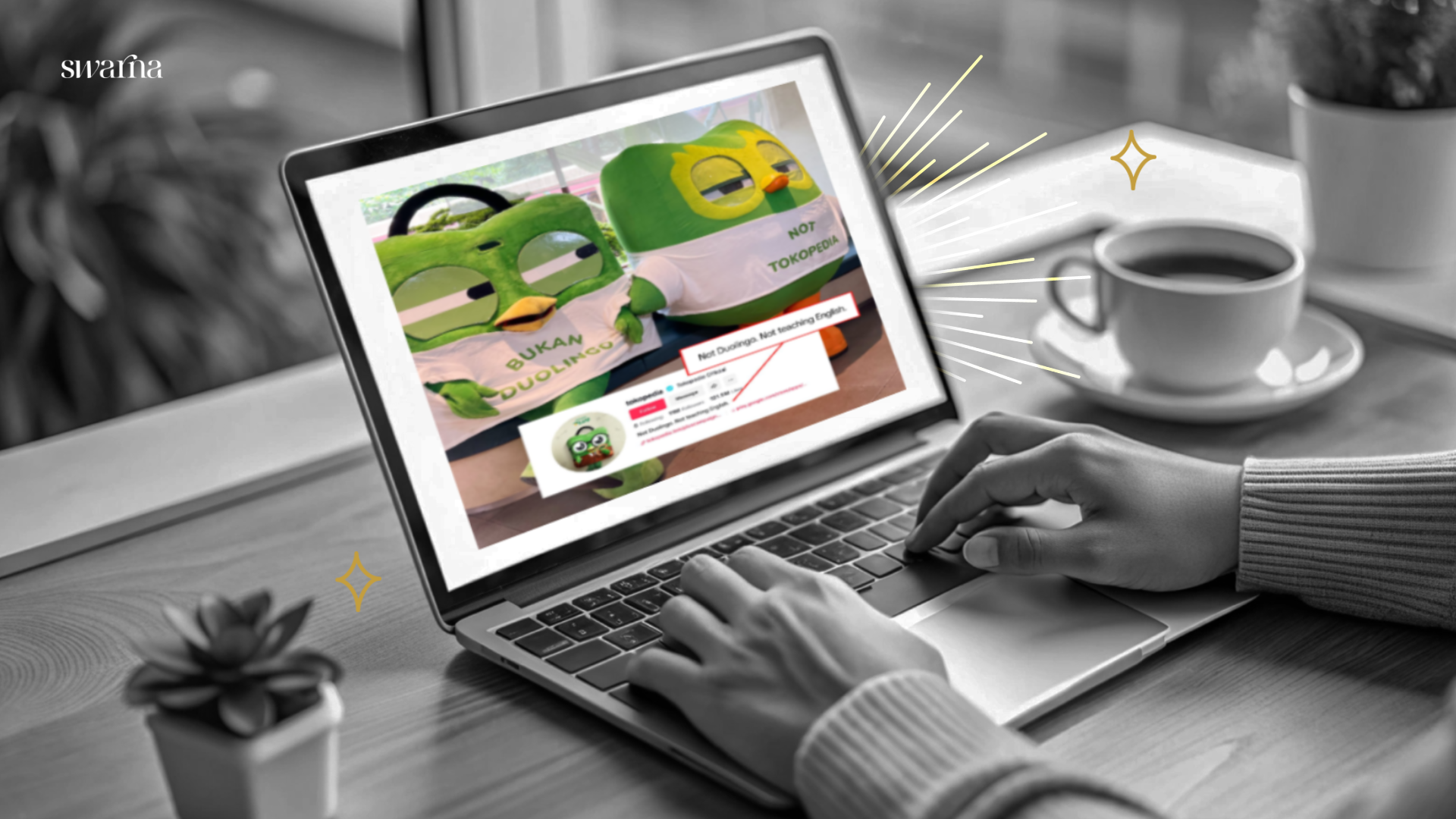
Brands that laugh at themselves build the highest trust. Duolingo turned this into an art form. Their "AI Took My Job" campaign and the infamous "Duo the Owl Death" stunt pulled 120 million views on TikTok. They sold self-aware absurdity, and people bought in.
Ryan Reynolds built an entire agency on this principle. When Astronomer faced a PR crisis, Maximum Effort turned it into viral gold by having Gwyneth Paltrow feign fainting on camera. Seven hundred thousand YouTube views later, the crisis was forgotten, and the brand was famous.
If you can take the hit first, nobody else can use it against you.
Adobe's 2026 creative trends report names "Connectioneering" as the dominant force: creative that is "instantly, intimately relatable.” This is not about being funny. It is about being painfully accurate.
B2B creators like Corporate Natalie and Corporate Erin nail branded campaigns by tapping into office culture humor that feels "painfully, hilariously accurate." Viewers do not laugh because it is clever. They laugh because it is true.
In Indonesia, this translates directly to live commerce. Successful TikTok Shop and Shopee Live sessions "feel like entertainment first and sales second." The best hosts are not salespeople but comedians with products. OPPO Indonesia's creator-led tutorials showing "how to create trending photo edits" worked because they felt like a friend showing you a trick, not a brand reading a spec sheet.
Gen Z is the unserious generation. They gravitate toward absurdity that defies logic. Nutter Butter's TikTok became a "psychedelic fever dream of anthropomorphic cookies" and won Social Campaign of the Year at the 2025 Ad Age Creativity Awards. Starface asked: "Pop quiz: what's more satisfying, popping bubble wrap or popping pimples? Wrong. Cover them with a star." That edgy, stupid-smart humor turned pimple patches into Gen Z's acne pride badge.
Most brands play it safe with corporate professionalism. The ones that win in 2026 will understand which humor architecture matches their audience's cultural context and have the guts to commit to it.
Humor is high-risk, high-reward. A 2025 study found that while humorous ads boost enjoyment and recall, serious ads outperform them in purchase intent across beverage, hygiene, and health categories.
Humor builds awareness. Trust closes sales. There is a time to crack up some jokes and there are times not to. If your product requires deep consideration, lead with credibility, not comedy.
Cultural misalignment is another landmine. Humor requires hyper-local cultural fluency. And Gen Z can smell inauthenticity. Wix's 2026 trend analysis notes that "cringe marketing" only works when it feels accidentally awkward, not performatively awkward. The second your audience senses you are trying to be funny, you have already lost.
This is why humor needs strategy, not just copywriters with jokes. It needs cultural intelligence paired with performance data to ensure it lands and converts.
AI can generate memes, but it cannot generate context.
Brands are using AI to create custom memes fast, but the generated humor lacks the cultural timing and emotional calibration that makes humor land. Women are more skeptical about AI-generated ads and less influenced by AI presence in advertising, which is a critical insight for brands targeting the female-majority social commerce audience. Younger audiences aged 18 to 35 are polarized about AI in ads since they notice it, and they have strong opinions.
The winning formula is AI optimization plus human creativity. AI handles the data, the timing, and the targeting. Humans handle the voice.
GoDaddy's Super Bowl LIX spot "Act Like You Know" starred Walton Goggins in self-deprecating humor. The joke was human-written, even as the campaign promoted GoDaddy's AI tool Airo. The humor was made by a human while AI was the setup.
Your brand doesn’t need a full-time comedian. You just have to do these:
First, audit your humor architecture. Are you self-aware, connection-driven, or surreal? Pick one. Do not mix.
Second, mine your employee stories. The best humor comes from real friction points. Employee-generated content builds trust because it is true.
Third, deploy micro-humor in high-frequency touchpoints. TikTok comments, live shopping banter, email subject lines. You do not need a Super Bowl ad. You need a consistent voice.
Fourth, test with AI, execute with humans. Use AI to A/B test humor angles, but never let it write the final joke.
Fifth, measure smile metrics: share rate, comment sentiment, watch time, and branded search volume. Humor's return is not always an immediate conversion. It is memory equity.
As AI-generated content floods every channel, distinctiveness is the only defensible asset. The irony of it all is that brands should take humor seriously as an immunity system against commoditization.
Referring to the data mentioned earlier, about 82% of your competitors are leaving the most powerful trust-building tool on the table. That means there is room to grow for brands looking to embrace it.
At Swarna, we do not write funny captions and hope they work. We can build humor-focused conversion funnels that perform in TikTok Shop, Shopee Live, and LinkedIn B2B environments. Our team combines cultural fluency with performance data to make sure your brand lands the joke and the sale.
If you are ready to stop sounding like everyone else, let's talk about what makes you laughably unforgettable.

At Swarna, we'll help your brand fly high so your reach shines brighter like the stars!
We don't just break limits, we redefine them.


.svg)